

Social Security Planning
How To Maximize Your Benefits
https://stoutwealthadvisory.com/social-security/
Social Security may be one of the most important retirement income decisions you will make. For many retirees, it provides a dependable source of monthly income that is adjusted for inflation and continues for life. For married couples, divorced individuals, widows, widowers, and families, the decision can be even more important because one person’s claiming choice may affect benefits available to someone else.
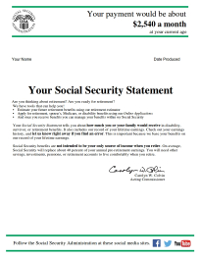
The hard part is that Social Security is not a simple “take it now or take it later” decision. Your best claiming strategy can depend on your age, health, work history, marital history, spouse’s benefit, survivor benefit, expected retirement income, tax situation, investment assets, and how long you may need your portfolio to last.
In general, you can begin retirement benefits as early as age 62, but claiming early usually means accepting a permanently reduced monthly benefit. If you wait until your full retirement age, you receive your primary insurance amount (your full retirement benefit). Note that full retirement age depends on your year of birth. Delayed retirement credits generally increase retirement benefits by about 8% per year (for people born in 1943 or later), although the increase is applied monthly. There is generally no financial advantage to delaying the start of retirement benefits beyond age 70.
That does not mean everyone should automatically wait until age 70. Some people need the income earlier. Some are still working. Some have health concerns. Some have a spouse whose survivor benefit needs to be considered. Some may be better served by using investment assets for a period of time so they can delay Social Security and lock in a higher lifetime benefit. Others may not.
This is why Social Security planning should be analyzed as part of your overall financial plan, not treated as a stand-alone decision.
The Stout Wealth Advisory Group financial advisors have used an online analysis program, Maximize My Social Security, to help a client analyze their specific financial circumstances when deciding when to start Social Security benefits. The tool allows us to compare claiming strategies and evaluate how different filing dates may affect lifetime benefits. It is especially useful because it can consider more than one benefit type, including retirement, spousal, divorced spouse, survivor, child, and other family-related benefits where applicable. Individuals who were married for at least 10 years and meet other eligibility requirements may qualify for divorced spouse or divorced survivor benefits.
The value of this type of analysis is not simply that it shows a larger monthly check. A higher monthly benefit is only one part of the story. The more important question is how the claiming decision affects your total retirement income, your withdrawal strategy, your spouse or survivor, and the long-term sustainability of your financial plan.
For example, delaying Social Security may require you to draw more from your investments in the early years of retirement. That may be a good tradeoff if it produces a higher guaranteed lifetime income later. But it needs to be tested against your expected expenses, your investment accounts, inflation assumptions, market risk, tax planning, and the income needs of a surviving spouse.
The decision can also be affected by work income. If you claim Social Security before full retirement age and continue working, the Social Security earnings test may temporarily reduce your benefits if your earnings exceed the annual limit. Those withheld benefits are not necessarily lost forever; your benefit may be adjusted upward after you reach full retirement age to account for months in which benefits were withheld. Once you reach full retirement age, the earnings test no longer applies. This is one reason it is important to review your work plans before starting benefits.
Survivor benefits deserve special attention. In many cases, the surviving spouse ultimately receives the larger of the two retirement benefits that were being received (or could have been received), while the smaller retirement benefit ends. However, many living expenses do not fall by the same amount. A claiming strategy that looks reasonable for one person may create a weaker outcome for the surviving spouse. Coordinating retirement benefits and survivor benefits can therefore be one of the most important parts of Social Security planning for married couples.
Tax planning is another factor. Up to 85% of Social Security benefits may be included in taxable income for federal income tax purposes, depending on your provisional income. Retirement account withdrawals, pension income, investment income, Roth conversions, and required minimum distributions can all affect the tax picture. A good claiming strategy should be coordinated with the rest of your retirement income plan.
There is also the Medicare connection. Many people think about Social Security and Medicare at the same time, but the rules are not identical. You may decide to delay Social Security while still needing to make timely Medicare enrollment decisions. Missing Medicare deadlines can create penalties or coverage problems, so Social Security timing should not be reviewed in isolation. Be sure to check out our Medicare Pitfalls page.
The main point is this: Social Security is often too valuable to guess at. Before you choose a claiming date, it is worth comparing your options carefully. A well-designed strategy can help you understand the tradeoffs, coordinate benefits with your spouse, protect survivor income, and make your retirement plan more reliable.
If you are approaching retirement, already eligible for benefits, widowed, divorced, still working, or unsure whether to claim now or later, we can help you evaluate the options and incorporate the Social Security decision into your broader financial plan.